Cost of Living
Emergency Costs And The Wage With No Slack
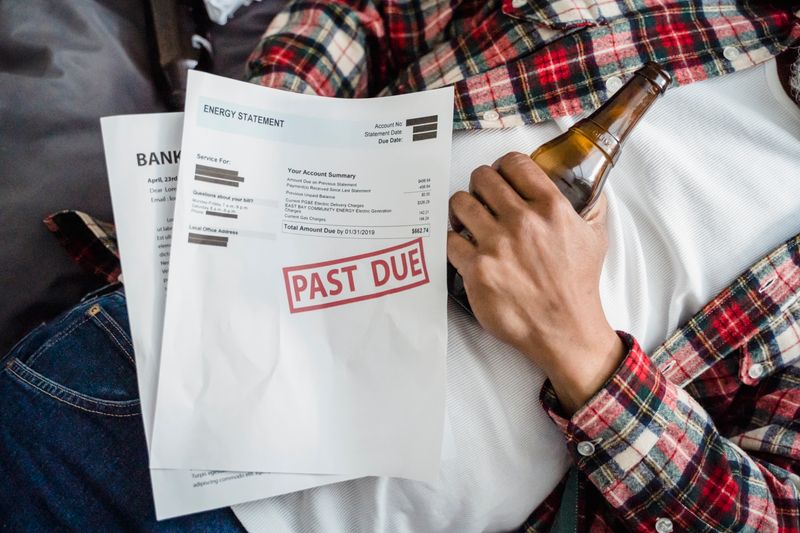
A household with no buffer meets one-off costs by deferring other payments, which converts a single unexpected expense into a sequence of late fees and arrears.

An unexpected bill is not one event for a household without savings. It becomes a chain of deferred payments, each with its own consequence.
Why the first cost is rarely the last
A wage that is fully committed has no source of funds for an unplanned expense. Meeting it means not paying something else, because the money exists only once.
The deferred payment then carries its own charge, arrives later alongside the following month's obligation, and competes with it. One shortfall has become two.
This cascade is why a modest one-off cost can produce arrears out of proportion to its size. The sequence, not the amount, does the damage.
Which bills get deferred first
Households triage by consequence rather than by size. Rent and utilities are protected because the consequences are eviction and disconnection, and those are visible.
Payments with softer immediate consequences are deferred instead, even where they carry higher charges. The ordering is rational in the short term and expensive over months.
Priority ordering is itself jurisdiction-specific, since which debts carry enforcement powers differs, and debt advice services exist in most systems to help establish the correct order.
Why irregular costs are not really unexpected
Vehicle repairs, appliance failures, school costs and insurance excesses are individually unpredictable and collectively routine. Over any year, several will occur.
Treating them as exceptional is what leaves them unfunded. Treating them as an annual category with an unknown distribution across months is what makes provision possible.
A buffer does not need to cover the largest possible cost to change the outcome. It needs to be large enough to stop the first deferral from starting the chain.
The cost of short-notice money
Money obtained at short notice is more expensive than money obtained with time, because the lender is pricing urgency, limited information and a short repayment window.
Charges may be expressed as fees, interest, or both, and the repayment date is often tied to the next payday. That timing places the following period under the same pressure.
Rules on cost caps, affordability checks and rollovers vary by jurisdiction and change, so the terms of any specific product have to be read as they stand rather than assumed.
Why buffers rebuild slowly
Rebuilding a buffer competes with restoring the payments that were deferred. Arrears are usually cleared first because they carry enforcement risk.
The household is therefore exposed for the whole period during which arrears are repaid, and a second unexpected cost arriving in that window restarts the sequence.
This is the mechanism behind the observation that the same households experience repeated crises. The structural cause is the absence of slack, not the frequency of misfortune.
Questions readers ask
How much extra pay justifies a longer commute?
Divide the annual pay increase by the extra annual travel hours and subtract travel costs from net pay. If the implied rate is below your hourly pay, the trade is poor.
Do hybrid days change the calculation?
Substantially. Two office days is a different commitment from five. Check whether remote days are contractual or informal, because informal ones can be withdrawn.
Also by Marcia Delgado
- Reading a payslip properly, line by linePay & Payslips
- Zero-hours and variable contracts: what to check before signingRights at Work
- What a wage buys now compared with a decade agoCost of Living
- The costs of going to workCost of Living